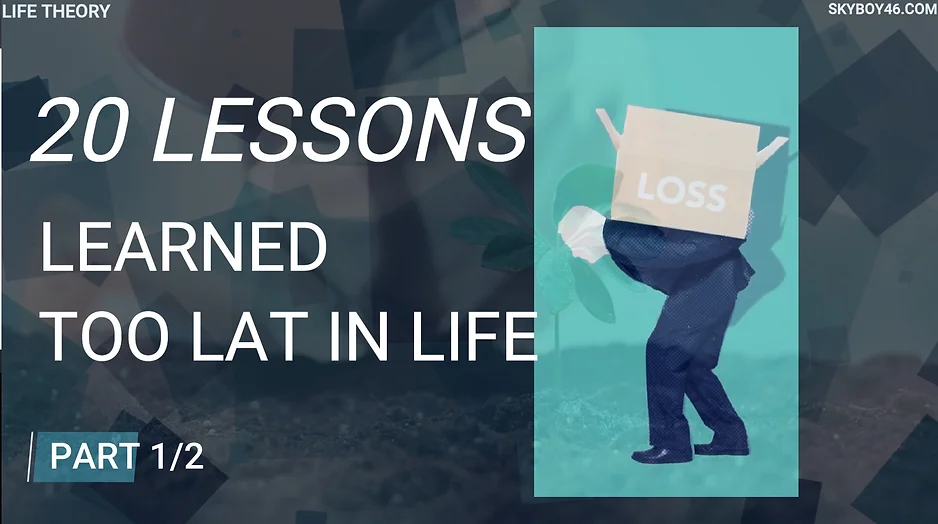
This article challenges the traditional focus on “what” one wants to be (career) and shifts the emphasis to “who” one wants to become (character). It discusses the limitations of defining oneself by occupation and encourages readers to focus on personal growth, problem-solving, and impact. The piece promotes a broader view of success beyond job titles.
SUBSCRIBE: https://www.youtube.com/@LifeTheory46
VISIT: https://linktr.ee/lifetheory46
Get You Monthly Life Stories in Advance & Our Premium Learning Packs HERE:
The Person You Want To Be
When we were kids, the question was simple, almost whimsical—what do you want to be when you grow up? It was a question posed with the best of intentions, encouraging us to dream big and imagine all the exciting possibilities the future might hold. Yet, there’s an irony buried in its simplicity. Most of the jobs that existed when we were kids have already changed, and many of the jobs today might not even exist by the time the next generation grows up. The world moves fast, and the roles we fill evolve just as quickly. But there’s a deeper flaw in this question. It subtly ties our identity to our occupation, as though who we are is defined by what we do for a paycheck. And while that notion has shaped societies for generations, maybe it’s time we challenge it.
Think back to when you were little. Maybe you wanted to be an astronaut, a doctor, or a marine biologist. These dreams were untainted by reality, driven by imagination and inspiration. But as we grow, we begin to realize how difficult or unattainable some of these paths might be. Some of us pursue those childhood dreams and make them a reality. Others find different passions along the way or settle into careers that never crossed our young minds. For many, this evolution leads to fulfillment. But for countless others, there’s a lingering discontent.
So, what if the question was never about what you wanted to be but about who you wanted to become? What if, instead of narrowing the scope to a specific job title, we asked ourselves—and even children—a better question? Imagine being asked not about a singular career path but about the kind of problems you want to solve. Because while occupations might fade or transform, problems persist. And framing it this way shifts the focus from roles to purpose.
The truth is, attaching identity to work is exhausting. Yet, society has done it for so long that it feels second nature. Think about it: when you meet someone new, one of the first questions you ask is, “What do you do?” Sure, it’s small talk, a way to break the ice, but it’s also a quiet judgment. Whether we admit it or not, we’re gauging their social status, their contributions to society, and perhaps even whether their life aligns with ours. But that question doesn’t tell you who they really are. It doesn’t reveal their passions, their struggles, or the impact they hope to have on the world.
What if, instead, we asked, “What are you curious about? What do you love to learn?” Imagine how much deeper and more meaningful those conversations could become. Suddenly, the focus isn’t on where someone works but on what drives them. It’s a subtle but profound shift—a step away from defining ourselves by our output and toward defining ourselves by our essence.
The pressure to choose a single identity through a career starts early. For children, being asked what they want to be when they grow up creates a weight they don’t need. Their passions and interests are supposed to evolve. Forcing them to commit to one path limits their curiosity and exploration, the very traits we cherish in childhood. And as adults, we know better than anyone how drastically our dreams can shift. The goals that once felt so clear can morph as we navigate the twists and turns of life.
In many ways, our early aspirations are unrestrained by practicality. They’re vivid, idealistic, and often untethered from reality. But those ambitions serve a purpose—they reflect the limitless potential we feel in our younger years. And while adulthood tempers that boundless imagination, it also offers something just as valuable: the ability to adapt, grow, and redefine what success looks like at any stage.
The outdated idea that worth is tied to a profession dates back centuries, particularly to the Industrial Revolution. Back then, your job wasn’t just how you earned a living; it was your identity, your place in society. It dictated your social status and shaped the way others viewed you. But as the world changes and technology transforms the workforce, clinging to that definition of success feels outdated and even harmful.
Automation and artificial intelligence are replacing some roles entirely, and while that might seem alarming, it also opens doors. It frees us to focus on creativity, problem-solving, and learning for the sake of fulfillment, not survival. The world is shifting away from valuing people for their job titles and toward recognizing the broader spectrum of their talents, passions, and contributions.
This transition is both liberating and challenging. It asks us to reconsider what success looks like in a world where careers are no longer the sole measure of achievement. And while that might feel unsettling, it’s also an incredible opportunity. Instead of asking what we want to do, we can ask what kind of problems we want to solve. Instead of focusing on job titles, we can focus on personal growth, curiosity, and the impact we hope to make.
The future of work is increasingly about autonomy and alignment. It’s about finding paths that resonate with our values and passions. And as society moves in this direction, we’re learning to define ourselves by our experiences and relationships rather than the roles we fill. Our worth isn’t in the paycheck we earn but in the lives we touch, the challenges we overcome, and the problems we solve.
So here’s the question we’ll leave you with: what kind of person do you want to be? Not what you want to do or achieve, but who you want to become. What kind of problems would you feel proud dedicating your life to solving? These are the questions that shape not just careers but legacies. And answering them might just change everything.
–> Read More Life Stories Here:
https://www.lifetheory.us
https://www.lifetheory.eu
Buy all of our Life Stories & Our Premium Learning Packs. Listen or Read to them anytime you want. Have them Forever.
You can get each monthly lesson on our website at https://www.skyboy46.com/store
SHARE THIS STORY
Visit Our Store
SHOP NOW
www.skyboy46.com & www.myskypet.com
Designed For Pet Lovers & Introverted Souls
Sport, Hobbies, Motivation, Music & Art





~EXPLORE MORE~
www.linktr.ee/skyboy46