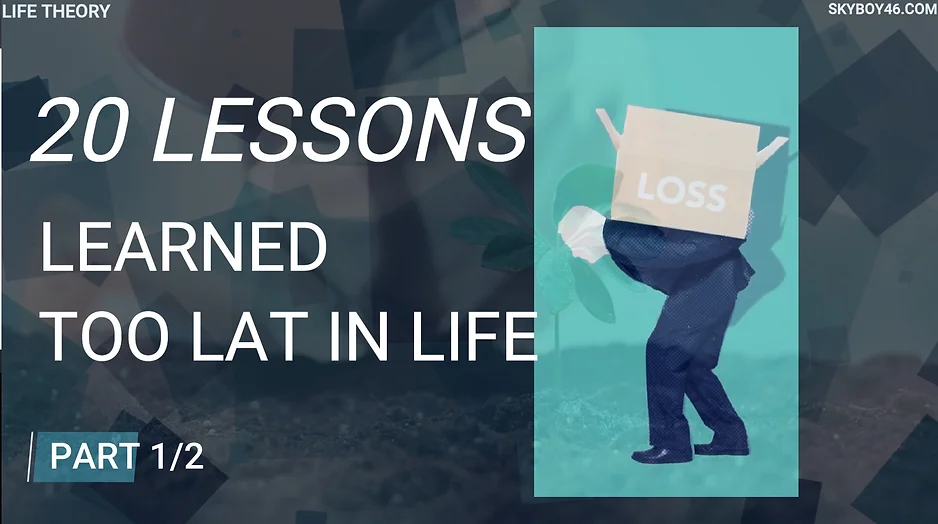
How can growth await when trust shatters? Understand the inevitability of betrayal and its potential for personal growth. Learn to navigate the pain, rebuild trust, and find strength in vulnerability. Are you ready to heal from betrayal?
SUBSCRIBE: https://www.youtube.com/@LifeTheory46
VISIT: https://linktr.ee/lifetheory46
Get You Monthly Life Stories in Advance & Our Premium Learning Packs HERE:
When Trust Shatters, Growth Awaits
Betrayal—just the word itself stings, doesn’t it? It carries a weight, a sharpness that cuts through the comfort of trust and leaves a mark that’s hard to erase. As much as we might try to avoid it, betrayal is one of life’s inevitabilities, an experience that shapes us in ways we never anticipate. And while the pain feels uniquely yours, it’s a thread in the tapestry of what it means to be human. You’ve been betrayed, you’ve felt the anger, the heartbreak, the confusion—and one day, if not already, you’ll realize you’ve likely done the same to someone else, even unintentionally.
Life has a funny way of forcing us to confront the dualities we’d rather ignore. Love and hate, comfort and fear, trust and betrayal—they aren’t as far apart as they seem. Think about love, for instance. It’s a force of connection, of safety, of hope. But betrayal? It’s born out of love in many ways. The deeper the connection, the greater the pain when it fractures. And that fracture? It’s a symptom of our flaws, not a reflection of your worth.
The intensity of betrayal isn’t something to bury or dismiss. Like a wound left unattended, ignoring it doesn’t bring healing; it only lets the infection spread. The anger and resentment fester, creeping into every corner of your life. But facing it? That’s the path forward. No shortcuts, no easy detours—just you, wading through the muck of emotions, step by painful step.
Philosophies like yin and yang have explored this concept for centuries. The balance of opposites—the light that can’t exist without the dark, the harmony born from discord—mirrors our inner struggles. Betrayal, as devastating as it feels, is part of this universal equilibrium. It doesn’t justify the act, but it puts into perspective why we experience such lows: so we can grow, adapt, and ultimately find peace.
And growth doesn’t mean forgetting. It doesn’t mean excusing what happened or pretending it didn’t hurt. Growth comes from acknowledging that hurt, naming it, and choosing to work through it. Maybe it’s through self-reflection, where you learn more about your own boundaries and vulnerabilities. Maybe it’s through honest conversations, as terrifying as they might feel, where you begin to release the grip that betrayal has on your heart.
Setting small, actionable goals can help. Start with naming the emotion out loud—anger, sadness, frustration—whatever it is. Then, establish tiny rituals to regain control, like taking ten deep breaths or listening to a song that grounds you. These aren’t magical fixes, but they’re steps—steps that bring you closer to a place where betrayal no longer defines your narrative.
What makes betrayal so uniquely painful is the way it shakes the foundation of safety we build with others. But here’s the thing: as much as betrayal hurts, it’s also an opportunity to rebuild. To create stronger foundations, with better understanding of yourself and those around you. You’ll come to see that resilience isn’t about avoiding the hard stuff—it’s about facing it, raw and unfiltered, and coming out the other side with scars that tell a story of survival, not defeat.
You’ll never be the same as you were before the betrayal, and that’s okay. Growth rarely leaves us untouched. But you’ll be stronger, wiser, and more at peace with yourself. And that’s worth every painful step through the swamp. No shortcuts, no boats—just you, reclaiming your power and proving that even in the face of broken trust, you can find wholeness again.
This journey might not be easy, but it’s yours. And the destination? That’s where strength and understanding live, waiting to welcome you with open arms.
–> Read More Life Stories Here:
https://www.lifetheory.us
https://www.lifetheory.eu
Buy all of our Life Stories & Our Premium Learning Packs. Listen or Read to them anytime you want. Have them Forever.
You can get each monthly lesson on our website at https://www.skyboy46.com/store
SHARE THIS STORY
Visit Our Store
SHOP NOW
www.skyboy46.com & www.myskypet.com
Designed For Pet Lovers & Introverted Souls
Sport, Hobbies, Motivation, Music & Art






~EXPLORE MORE~
www.linktr.ee/skyboy46